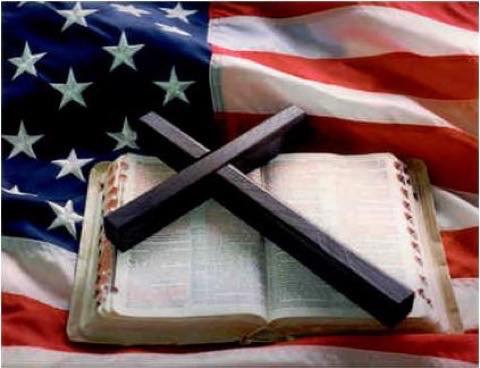
Tag: faith
Faith without Works
Faith without work cannot be called faith. Faith that works is dead” (James 2:26), and a dead faith is worse than no faith at all. Faith must work; it must produce; it must be visible. Verbal faith is not enough; mental faith is insufficient. Faith must be there, but it must be more. It must inspire action. Throughout his epistle to Jewish believers, James integrates true faith and every day practical experience by stressing that true faith must manifest itself in works of faith.
Faith endurance trials. Trials come and go, but a strong faith will face them head on and develop endurance. Faith understands temptations. It will not allow us to consent to our list and slide into sin. Faith obeys the word. It will not merely hear and not do. Faith produces doers. Faith harbors no prejudice. For James, faith and favoritism cannot coexist. Faith displays itself and works. Faith is more than words; it is more than knowledge; it is demonstrated by obedience; and it overtly responds to the promises of God. Faith controls the tongue. This small, but immensely powerful part of the body must be held in check. Faith can do that. Faith acts wisely. It gives us the ability to choose wisdom that is heavenly and to shun wisdom that is earthly. Faith produces separation from the world and submission to God. It provides us with the ability to resist the devil and humbly draw near to God. Finally, faith waits patiently for the coming of the Lord. Through trouble and trial it stifles complaining.
Let us strive for the faith that James describes in his short book. James is the blue jeans theology of the Bible. Put your jeans on to strive for Godly faith.
The Founders Meant to Keep Government Out of the Church, Not God Out of the Government
Paul Strand
This is a wonderful, factual article. The left has duped American to believe a lie. Our founders were terrified of a government run church. After seeing the overreach of government these last few years, their fear is well grounded. Enjoy the article. Rh
The 4th of July makes us think of our independence and freedoms. And legal battles in recent years over religious liberty in the U.S.A. raise serious questions about the freedom to worship in America. So when our Founders came up with the First Amendment, were they trying to keep the government free from religion, or religion free from government?
These days, the phrase “wall of separation between church and state” has come to mean keeping God or His believers from having a big effect on government and public life. But that’s far, far from what the Founding Fathers were thinking of when they were separating church and state.
Fear of an All-Powerful State Church Wed to the Power of the Government
They were afraid of what so many of the Old World countries had: a religion established by the state as its one true religion, that would tyrannically rule over the faith and conscience of every citizen.
As the Providence Forum’s Peter Lillback put it, “They recognized having a monolithic church was a dangerous thing.” That’s because it made the king not only their physical sovereign but also their all-powerful spiritual ruler.
Before the Pilgrims fled England, Wallbuilders’ David Barton recalled, “The Pilgrims’ pastor was executed because he made the statement that Jesus Christ is head of the church. And the monarch said, ‘Oh no, I’m the head of the church. You’re dead.’”
Wouldn’t Allow a Church of America Like the Brits Had the Church of England
Knowing of such terror and tyranny, AmericanMinute.com historian William Federer explained how the Founders felt: “Their big fear was the federal government was going to follow the blueprint of every country in Europe and pick one national denomination.”
So what they meant by saying in the First Amendment “Congress shall make no law respecting an establishment of religion” was that the federal government was banned from creating – or “establishing” – a national religion with the national government wedded to it.
“They didn’t want to have a national, established Church of America like you have the Church of England, forcing people to believe something that they didn’t believe in,” said Jerry Newcombe, host of the radio program “Vocal Point”.
“What they said was, ‘We don’t want a state church here. Consciously, therefore, they were separating the church from government,” Lillback said.
But that was strictly to protect the churches and each believer’s faith and conscience from the government.
All About Protecting Each American’s Conscience and Freedom to Believe
Not only did the First Amendment say, “Congress shall make no law respecting an establishment of religion,” but it also said, “or prohibiting the free exercise thereof.”
“What they wanted was the freedom that we have in the Bible: the rights of conscience,” Barton said. “And they didn’t want the state telling us how we could or couldn’t practice our faith.”
Lillback said the Founders keeping government control away from faith meant, “Each of us has a right to be who we are before God. It has been well said and it’s a classic statement of religious liberty that man is not free unless he is free on the inside. We have to have the freedom to believe what we believe. That’s what the First Amendment protects.”
God: He’s on Both Sides of the Wall’
And that’s what Christian historian Eddie Hyatt explained Thomas Jefferson was talking about when he wrote the letter that first used the famous “wall of separation” phrase to a group of worried Baptists.
“He said that the First Amendment had erected a wall of separation that would protect them from any intrusion of the government,” Hyatt stated. “In Jefferson’s mind, the wall of separation was a uni-directional wall, put there to keep the government out of the church; not to keep the influence of the church out of the government.”
There was no antipathy towards the Lord in all of this, Lillback insisted, saying, “But the idea of God: He’s on both sides of the wall. And He’s welcome there. And He should be.”
The Government Is Reaching Over that Wall, Bossing Around People of Faith
But today, there’s been a complete flip.
Lillback said, “Those who once believed in this really high and impregnable wall of church and state, we now see the government reaching over that wall and saying, ‘but don’t preach that text of scripture.’”
STAY UP TO DATE WITH THE FREE CBN NEWS APP – Click Here Get the App with Special Alerts on Breaking News and Top Stories
Barton added, “All of a sudden the government’s regulating religious activities, which is what Jefferson said they would not do because of separation of church and state.”
Hyatt lamented, “The Founders would be so distressed to see how that statement has been turned on its head.”
As Newcombe explained, “They absolutely did not mean the separation of God and government, which is what’s often being practiced today.”
No One ‘Under Government,’ but Each One ‘Under God’
Lillback encourages Americans to remember what the nation’s Founders intended.
“This is a theistic government. So God was not separated from government,” he insisted. “So any interpretation of the First Amendment that takes God out of government is turning the whole story on its head. Rather it was taking a formal state church out of the equation, leaving it up to each individual. But all, as we still say, ‘under God.’ That was the view of our Founders.”
They believed a nation based on liberty could only stay free if its citizens were godly people. As Barton pointed out, believers in God have their eyes on eternity, and it makes them practice self-control.
Knowing You’ll Answer to God Makes You Govern Yourself
“When you’re God-conscious, you realize, ‘ya know, I’m going to have to answer to Him for what I do,’ and it limits my bad behavior,” Barton stated.
Newcombe added, “That’s something the Founders believed very strongly: that we’re going to be accountable before God.”
Hyatt said of those Founders, “They knew that they were creating a nation for a free people, but also for a virtuous people who would govern themselves from within.”
You need very little police power if people, because of conscience, will police themselves.
Green Bean Control Laws?
“Self-control is what you need,” Barton explained. “We can pass all the control laws we want. But unless you control the heart, you’ll never control behavior. I mean, I can kill somebody with a can of green beans. What are we going to do? Pass green bean control laws if somebody does that? No. It’s on the inside.”
And the Founders knew to keep America true and free, they also needed the perfect law of a loving, all-wise God.
As Lillback put it, “There was a clear understanding that the government needed to have an ultimate check and balance, even beyond the people that ran it and their elections. And that is the transcendent law of God. And so that is why when we look at our Declaration of Independence, there are four references to Deity.”
Going through the Declaration, Lillback laid them out: “‘We’re endowed by our Creator with certain inalienable rights.’ The laws of God and nature. And it tells us there’s an appeal to the Supreme Judge of the world. And, finally, a dependence on the Providence of God. Four references to Deity.”
Not Godless at All
But then came the US Constitution, which some say is a godless document because God isn’t mentioned in it. As soon as they were done with it, though, the Founders called for a day of Thanksgiving to God.
“They were not thinking ‘let’s get rid of God,'” Lillback stated. “They said, ‘We have been given now a new Constitution, and now amendments that give us our freedoms. And where do we turn? We turn to heaven and thank God for this.'”
“Now, if their intent was to get rid of God from government, boy did they miss their point,” Lillback said. “Because they turned around and thanked Him for everything that they had. It shows the utter historical absurdity of ‘the godless Constitution’.”
Constitution’s Last Words Reference Christ
And God isn’t really absent from the Constitution or its authors’ lives.
“They are not godless,” Lillback insisted. “They are people who, at the very end of their work, said, ‘In the year of our Lord, 1787.’ The very last words in the Constitution are a reference to Jesus Christ.”
He concluded, “It’s no surprise then that the ultimate motto is We are One Nation Under God.”
Jews Are Not Just a People, But They are A Testimony
Below is an excellent article that captures so very much about the stamina and drive of the Jewish people and a small nation called Israel. Rh
This is an excellent article by Alister Heath, a British journalist for the Daily Telegraph:
There’s something about Israel that makes people uncomfortable, and it’s not what they say it is.
They’ll point to politics, settlements, borders, and wars. But scratch beneath the outrage, and you’ll find something deeper. A discomfort not with what Israel does, but with what Israel is.
A nation this small should not be this strong. Period.
Israel has no oil. No special natural resources. A population barely the size of a mid-sized American city. They are surrounded by enemies. Hated in the United Nations. Targeted by terror. Condemned by celebrities. Boycotted, slandered, and attacked.
And still, they thrive like there’s no tomorrow.
In military. In medicine. In security. In technology. In agriculture. In intelligence. In morality. In sheer, unbreakable will.
They turn desert into farmland.
They make water from air.
They intercept rockets in mid-air.
They rescue hostages under the nose of the world’s worst regimes.
They survive wars that were supposed to wipe them out, and win.
The world watches this and can’t make sense of it.
So they do what people do when they witness strength they can’t understand.
They assume it must be cheating.
It must be American aid.
It must be foreign lobbying.
It must be oppression.
It must be theft.
It must be some dark trick that gave the Jews this kind of power.
It must be blackmail.
Because heaven forbid it’s something else.
Heaven forbid it’s real.
Heaven forbid it’s earned.
Or worse, destined.
The Jewish people were supposed to disappear a long, long time ago. That’s how the story of exiled, enslaved, hated minorities is supposed to end. But the Jews didn’t disappear. They actually came home, rebuilt their land, revived their language, and brought their dead back to life — in memory, in identity, and in strength.
That’s not normal.
It’s not political.
It’s biblical.
There’s no cheat code that explains how a group of people return to their homeland after 2,000 years.
There is no rational path from gas chambers to global influence.
And there is no historical precedent for surviving the Babylonians, the Romans, the Crusaders, the Inquisition, the pogroms, and the Holocaust, and still showing up to work on Monday in Tel Aviv.
Israel doesn’t make sense.
Unless you believe in something beyond the math.
This is what drives the world crazy. Because if Israel is real, if this improbable, ancient, hated nation is somehow still chosen, protected, and thriving, then maybe God isn’t a myth after all.
Maybe He’s still in the story.
Maybe history isn’t random.
Maybe evil doesn’t get the last word.
Maybe the Jews are not just a people… but a testimony.
That’s what they can’t stand.
Because once you admit that Israel’s survival isn’t just impressive, but divine, everything changes. Your moral compass has to reset. Your assumptions about history, power, and justice collapse. You realize you’re not watching the end of an empire. You’re witnessing the beginning of something eternal.
So they deny it.
They smear it.
And rage against it.
Because it’s easier to call a miracle “cheating” than to face the possibility that God keeps His promises.
And He’s keeping them still!
Renew the Inner Man Pt. 1
Israel Shall Not Be Moved
Why I know Israel wins in the end. No one can drive them out of their land. The Lord said He would restore Israel, and He fulfilled that prophecy on May 14 1948. Once they are back, they will never leave again.
Jeremiah 16:14-16
Therefore behold, the days are coming,” says the LORD, “that it shall no more be said, ‘The LORD lives who brought up the children of Israel from the land of Egypt,’ but, ‘The LORD lives who brought up the children of Israel from the land of the north and from all the lands where He had driven them.’ For I will bring them back into their land which I gave to their fathers.”
Therefore behold the days are coming: The previous word from Jeremiah was about as dark as could be, with God promising I will not show you favor in the land of their coming exile. Yet as if God could not help Himself, that word of despair is immediately followed by a wonderful and gracious promise.
No more shall it be said, “The LORD lives who brought up the children of Israel from the land of Egypt”: God’s deliverance of His people from Egypt was the central act of redemption in the Old Testament. Through the Passover celebration and in many other ways, God constantly reminded Israel of this great work.
c. But, “The LORD lives who brought up the children of Israel from the land of the north and from all the lands where He had driven them”: God made a remarkable promise – that there would be a new measure of His greatness and redemptive power. The new measure would be the return from captivity when God would bring them back into their land.
“The reference to ‘all the countries’ shows that the prophet was predicting a restoration from a general dispersion after the Exile.” After AD 70 the Jews were scattered unto the four corners of the earth. No nation could survive that, however the Jews did! Because of God. A greater than Egypt may very well be pulling them back from all nations
God was so determined to fulfill His promise to a return to the land, He sent out fishers (to catch them) and hunters (to hunt them down) to return them to the land of promise. Even so far as the cleft of the rock. (Place of hiding and safety.)
No one could deny the greatness of the deliverance from Egypt, but the regathering was even greater. Here God pulls them back to their homeland
Isaiah 43:5-6 God says I will bring your descendants from the East (behind the iron curtain), from the west (Western Europe & America), the North (following the fall of the Soviet Union), the South (Ethiopians Jews in 1991). God brought His sons and daughters from the ends of the earth, to a land given to Abraham. No people group could have accomplished this on their own. But God…..
Why do I believe Israel will never be defeated, because they have returned and made the desert blossom like a rose.🌹
There is a valuable spiritual analogy here. The initial work of redemption in the life of a believer is great; but the restoring work of the believer – when God brings a chastened child of His out of a metaphorical exile and back into His favor and promise – this work may sometimes be regarded as even greater. This is the principle God revealed to Jeremiah.
None of us are too far gone that Jesus cannot restore. Welcome home child, you belong in the Father’s arms!
DEAL OR NO DEAL
Fearful & Forgetful
An Open Heaven
At times the Lord seems to give me an open heaven. Not that I see anything or dream any dreams, but His Word just comes alive and is so real to me. Revelation knowledge is flowing like a summer thunderstorm drenching me with insight and an ability to see and apply God’s Word. Things hidden and just not seen become as plain as the noonday sun. I may write or make outlines on various sermon and Bible studies. It just comes so easy. It just flows. The Holy Spirit is so real and I don’t even have to try to get into the flow, it’s like I’m in the midst of a Holy Spirit river, moving at not my will or pace, but at His pace. I love and cherish those times. They are the “times of refreshing.” I feel like a warrior, ten feet tall with bulging spiritual muscles.
Unfortunately they often come after an intense time of spiritual battle. Times of failure or having disappointments that allowed that depressive spirit to attack me. Most of those times it was my failure that caused the attack. I opened the door. At times like that I feel lower than a snake’s belly in a wagon rut, but God is so gracious to break that spirit and because of His love, allows a fresh anointing to come and spark revelation and a sense of closeness that’s brings forth an inner depth of vitality in the Holy Spirit.
An open heavenly is seemingly a download from the throne room of God. Oh how I love that time of study and insight that is given by the Spirit. I believe it is the Spirit’s way of saying, you made it through and victory is yours. Fresh wine quenches the spiritual thirst, and fresh manna fills the spiritual belly.
Oh that I could live in that place of an open heaven. Maybe that is what heaven will be like. Rh
Children Rescued from Sex Predators.
Praise God, slowly but surely we are seeing some of the results we coated for. Rh

