The Land of Possibilities by Amit Segal on Israel Hayom

Here might be a different perspective on the Gaza ceasefire and the confusing and troubling issues of the Middle East. Peace is elusive and wrought with many dangers. Thought provoking, hope you enjoy the read. I certainly don’t agree with all that is written, but again a Jewish newspaper’s perspective. Rh

If Israelis had heard how the President of the United States spoke about the hostages, it’s doubtful that he would have received such thunderous cheers at Hostages’ Square last Saturday night. To say they were a secondary concern for him would be an understatement, and even that understates it. Donald Trump favored eliminating Hamas the American way, and 20 living hostages (he was always confused about their number and minimized it — I wonder what Sigmund Freud would have said) seemed to him a marginal matter, collateral damage

Only belatedly did he perceive how strategic the issue was for the Israelis, and therefore for their government as well. In the United States, presidents have usually not been criticized for meeting hostages’ families too little, but for doing so too often (for details, search “Ronald Reagan” on Google).

In one of the discussions before Operation Gideon’s Chariots B began, Netanyahu spoke about the scar that would remain in Israeli society if Israeli forces conquered Gaza City at the cost of the hostages’ lives. Allow me to guess that he never really believed the moment would come.

Indeed, in recent months, Netanyahu and Ron Dermer’s perception was that an operation to conquer Gaza City, if it happens, might begin, but certainly would not reach completion. Here is the inside story.

Following the successful war in Iran, Israel tried to use the momentum to reach a partial deal. The idea was to release half the hostages and, during a 60-day ceasefire, arrive more or less at the conditions achieved this week. But Hamas, inspired by a Gaza starvation campaign that was gaining international traction, refused. President Trump, still in the shadow of Israel’s victory in Iran, thought the IDF could eliminate the remnants of Hamas as quickly as it smashed Tehran’s nuclear program. The combination of Hamas’ refusal and the president’s ambition led Israel to decide to enter Gaza City.

The idea was proposed by Minister Avi Dichter: conquering the city is the end of Hamas, he said at one meeting. The magic happened almost immediately: “Even before our forces entered the city,” Dermer recounted, “three days of talk about the operation did what three months of negotiations failed to do. Hamas suddenly agreed to a partial deal. But by then time had already run out.”

Israel faced two options: one, to conquer the remainder of the strip and establish a military government with American support. Dermer and Netanyahu believed that would require national unity and backing from Trump. The first component did not exist, and the second was highly unlikely.

The second option was a plan manufactured by Israel, led by the Americans, and supported by Arab states. President Reagan once told his people: you’ll write the plans, and I’ll be the presenter who markets them. This plan was no different, with Dermer filling the role of the writer. It was clear that any plan presented as purely Israeli would be pronounced dead before it was even born. That doesn’t mean every tweet was coordinated, the minister said at the cabinet meeting this week, but on the big matters, Jerusalem and Washington moved together.

Thus began arduous negotiations with Middle Eastern countries. During a round of talks in New York, it seemed impossible to get all those elephants into the same private room. Nevertheless, Israel’s representatives returned from there with 17 substantive comments from the Sunni states and even an agreement in the offing.

Then came September 9. Early in the morning, a three-person telephone consultation was held about the strike: Prime Minister Netanyahu, Defense Minister Katz, and Minister Dermer. All three supported the attack. Many issues came up in the consultation, but one particular issue did not: none of them believed there was an Israeli commitment to the Qataris not to strike Hamas personnel on their soil. Netanyahu called President Trump minutes earlier, but the president was groggy after a late night of discussions. It took time to reach him. The strike went ahead.

So far, it’s unclear how senior Hamas figures escaped the attack, but it’s obvious that it brought the deal closer. I recently wrote that it was the most successful failed assassination in history, in the sense that it signaled to the Qataris that the war would come to them if they did not stop their double game.

Dermer sees it differently. He links the strike to the agreement, but in a completely different way. The Qataris, it turns out, were convinced that by agreeing to host the negotiations, they had obtained immunity from Israeli strikes on their soil. From their perspective, the strike was a blatant, offense breach of the commitment.

Qatar had been unable to bring a deal for a long time, but it’s not half bad at thwarting deals. “The spoiler state,” they called it in Jerusalem — one that can easily ruin any agreement, as it did to the Egyptian hostage deal that was forming last spring behind its back.

Qatar is a complicated nation, Netanyahu said recently. What is it made of? In Jerusalem they describe two trains running behind the same engine. One, led by the ruler’s mother and brother, supports the Muslim Brotherhood and is an unmistakable hater of Israel. The other, led by the prime minister and several other senior figures, seeks rapprochement with the West.

Around April, a turning point was identified in Doha. Relations with the United States tightened significantly, and Hamas, an oddly patronized child, became a burden and a stain. All the Arab states rushed to assemble at the emir’s conference, both in anger at Israel and fear of a blue-and-white domination of the Middle East.

The Americans’ genius was to convert that negative energy into fuel to propel negotiations to their goal. “You want Israel to stop? Then let’s end the war,” they told the Sunni countries, and thus enlisted them in a framework that seemed impossible: a pan-Arab, almost pan-Muslim commitment to the elimination of Hamas. Dermer drafted the apology for the death of the Qatari security official; in Doha they reciprocated with a goodwill gesture by dramatically toning down Al Jazeera’s hostile tone.

More than enlisting them against Hamas, which had annoyed the entire Arab world, the achievement was to enlist them for a framework that does not include the Palestinian Authority in the foreseeable future. That is, for example, what held the Emiratis back from entering Gaza a year and a half ago. In one sense, that is the great innovation: before the plan, Gaza belonged to the Palestinian Authority; now it is Arab-international until further notice. The PA, meanwhile, hates Hamas so much that it agreed.

Yes, there will be a two-state solution, Dermer said this week. But not between the river and the sea — within the Gaza Strip itself. The plan is that as long as Hamas does not disarm, reconstruction will begin — but only in the half of the strip under Israeli control. What two years of war did not accomplish will be done by market forces: where will the population feel it is better to live — amid the ruins under Hamas boots, or in a rehabilitated area with an Emirati-funded school and a trailer home for each family?

The Americans believe this is a temporary situation, and are convinced that Hamas will be disarmed soon. Israel, of course, is much more skeptical. In a recent meeting, IDF Chief of Staff Eyal Zamir made a request of the Americans: Explain to me please. Your multinational force, with a few battalions, enters a tunnel. Hamas operatives are armed there. How exactly does this disarm Hamas? Who exactly will hand over the weapons? And what if they don’t?

You didn’t believe the first phase would happen, the Americans said, believe that the second will happen too. Have a little faith, the Jews with an American flag on their lapel told the Jews with an Israeli flag. 

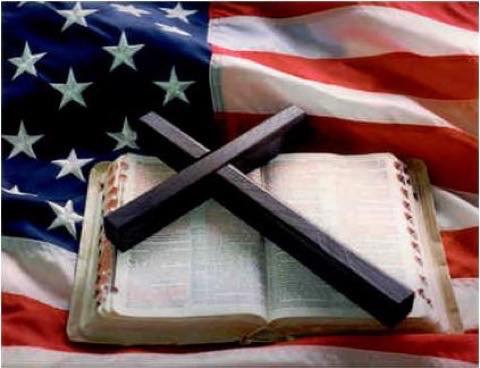
CONSTITUTION DAY: How the Bible and Faith of Our Founders Helped ‘Secure the Blessings of Liberty’

Paul Strand As a freelance reporter for CBN’s Jerusalem bureau and during 27 years as senior correspondent in CBN’s Washington bureau, Paul Strand has covered a variety of political and social issues, with an emphasis on defense, justice, government, and God’s providential involvement in our world. Strand began his tenure at CBN News in 1985 as an evening assignment editor in Washington, D.C. After a year, he worked with CBN Radio News for three years, returning to the television newsroom to accept a position as a senior editor in 1990. Strand moved back to the nation’s capital in 1995.

September 17th celebrates Constitution Day, marking that key American document’s ratification. Some question why it’s said America was founded as a Christian nation since there’s no mention of God in the Constitution. But leading Christian historian Peter Lillback explains while the Lord’s name may not appear, the Constitution is deeply rooted in God’s teachings, ways and words.

The Founding Fathers who wrote and signed the Constitution saw themselves as men of faith, and used what they learned from a lifetime of reading and studying God’s Word to help form the new nation’s law and government.

‘We Were Shaped by the Bible’

“I like to say that it’s not that we established a Christian country,” Lillback told CBN News. “But without Christian values, we would never have established THIS kind of country. We were shaped by the Bible.”

Outside the National Constitution Center in Philadelphia where the Preamble of the Constitution is displayed in huge letters on the outside of the building, Lillback showed phrase by phrase how the Preamble reflects biblical values the Founders knew well.

The Preamble begins like this: 

“We the People of the United States, in Order to form a more perfect Union, establish Justice, insure domestic Tranquility, provide for the common defense, promote the general Welfare, and secure the Blessings of Liberty to ourselves and our Posterity…”

Lillback explained that their intention was clearly for a “more perfect Union”, not one that was already perfected. “It begins by saying ‘We the People of the United States’ come together to make a ‘more perfect union’,” this founder of the Providence Forum said. “They want to be one; they know they can’t be perfect. They want to be ‘more perfect’. That’s a biblical idea: ‘we’re trying to get better. We can progress.’”

As for that word “union,” Lillback asked, “Remember how the Bible says ‘how blessed it is when brothers dwell together in unity?’  That’s a biblical value.”

‘Do Justice, Love Mercy’

Then it says “…establish Justice…”   

Lillback quotes Micah 6:8: “‘The Lord has shown you what He requires of you, o man: that you would do justice, love mercy.’ Justice is a biblical concern. Some would say the Ten Commandments define justice.”

Next, it says “…insure domestic Tranquility…”

The Providence Forum founder commented, “That’s to make sure that we live together in peace with one another.  Paul will say in Romans chapter 12, ‘As much as lies within me, I will live at peace with all men.’ The idea of tranquility is a great biblical concern.”

Defense is a Biblical Concern

Next: “…provide for the common defense…”

“To make sure that the vulnerable are protected. We know that one of the great principles of God’s law is to defend the orphan and the widow, the stranger in the land,” Lillback pointed out “And to make sure that there’s not an unjust assault against the community by a foreign power. These are biblical concerns.”

Next: “…promote the general Welfare…”

“As much as lies within us, we should do good to all men, especially to those in the household of faith,” said Lillback who is also the president of Westminster Theological Seminary. “The idea of providing for the needy, that is a concern that’s reflected in biblical ethics.” 

‘Liberty is a Gift of God’

Next:  “…and secure the Blessings of Liberty…”

“I always like to say that the word ‘blessing’ is a word you don’t hear atheists using. The very nature of blessing is something that is being given to us from God,” Lillback explained. “And liberty is something that God has blessed us with.  In fact, we find it in the jubilee text of Leviticus 25 and verse 10 that’s on the Liberty Bell: ‘proclaim liberty throughout the land to all the inhabitants thereof.’ Liberty is a gift of God.”

Finally: “…to ourselves and our posterity.”

“Our Founders remembered God’s covenantal vision that ‘I will be your God and the God of your children to a thousand generations after you.’ When you talk about to our posterity, that’s the ring of covenantal succession. That’s right out of the scriptures,” Lillback said. “It goes back to the Abrahamic covenant.”

God’s a Lawgiver, Judge & Ruler.  We have Lawgivers, Judges & a President

Then the Constitution lays out our legislative, judicial, and executive branches of government. And all three reflect different aspects of God Himself, shown in the Bible.

“In Isaiah 33:22 where it talks about how our God is a God who is a LAWGIVER — who is in fact a JUDGE. He’s also a king or a RULER. Again, derivatives of God’s very Word, God’s very nature.”

And so the Founders who knew their Bible so well created a government that could imitate and reflect these aspects of God.

A Republic: Can We Keep It?

When a woman asked Benjamin Franklin what kind of government the Constitutional Convention has just come up with, he replied, “A republic if you can keep it.”

And how can we keep it?

Historian Lillback recalled, “Washington said ‘It is impossible for us to succeed unless we imitate the divine author of our blessed religion.’ Those are the words that he said to each of the governors as he was stepping down as a successful general. And in his farewell address as president: ‘Religion and morality are indispensable supports for our political prosperity’.”  

“Remember the logic: to have a republic, you need to have people who are moral because a republic is written on a piece of paper.  Are you going to do what it says?   You have to be committed to doing what is right,” Lillback explained.  “How do you get a moral people?  You need to have a religious people. ‘Religion and morality are indispensable for our political prosperity’.”

No Constitution has Lasted Longer

He summed up for CBN News what the Bible and religious faith did for America through our Founders.

He said, “By learning from His Word, we gain wisdom, and that wisdom creates the longest continuously used Constitution on the face of the earth.”

U.S. Rep. Barry Moore: The ‘DIGNITY’ Act is a surrender to mass amnesty

U.S. Rep. Barry Moore | 07.31.25

After spending the last two years on the House Judiciary Committee battling Biden’s border crisis, I cannot stay silent while members of Congress bring forward the so-called “DIGNITY Act.” Despite its catchy name, this bill is nothing more than amnesty dressed up in buzzwords — and it’s an affront to every American who believes in law and order.

The “DIGNITY Act,” above all, rewards illegal behavior. This legislation creates a convoluted “Dignity Program” that welcomes illegal immigrants to stay in this country for seven years and eventually apply for permanent residency, while millions of law-abiding immigrants wait in line, playing by the rules. It also prevents Immigration and Customs Enforcement from enforcing many of the orders President Trump has given them.

That’s not dignity. That’s a betrayal of our immigration system and a direct incentive for more lawlessness at our Southern border.

Let’s keep America what our founders wanted. Immigration is a concept given to us by the elites who are sheltered by the conduct of those who come here for our benefits alone. Assimilation is mandatory! Learn the language, be proud of your new country, and you are more than welcome. The process of legal immigration must be adhered to. Let’s don’t let the elites and the one world government destroy our country Rh

The Founders Meant to Keep Government Out of the Church, Not God Out of the Government

Paul Strand

This is a wonderful, factual article. The left has duped American to believe a lie. Our founders were terrified of a government run church. After seeing the overreach of government these last few years, their fear is well grounded. Enjoy the article. Rh

The 4th of July makes us think of our independence and freedoms. And legal battles in recent years over religious liberty in the U.S.A. raise serious questions about the freedom to worship in America. So when our Founders came up with the First Amendment, were they trying to keep the government free from religion, or religion free from government?  

These days, the phrase “wall of separation between church and state” has come to mean keeping God or His believers from having a big effect on government and public life. But that’s far, far from what the Founding Fathers were thinking of when they were separating church and state.

Fear of an All-Powerful State Church Wed to the Power of the Government

They were afraid of what so many of the Old World countries had: a religion established by the state as its one true religion, that would tyrannically rule over the faith and conscience of every citizen.

As the Providence Forum’s Peter Lillback put it, “They recognized having a monolithic church was a dangerous thing.”  That’s because it made the king not only their physical sovereign but also their all-powerful spiritual ruler.

Before the Pilgrims fled England, Wallbuilders’ David Barton recalled, “The Pilgrims’ pastor was executed because he made the statement that Jesus Christ is head of the church. And the monarch said, ‘Oh no, I’m the head of the church. You’re dead.’”

Wouldn’t Allow a Church of America Like the Brits Had the Church of England

Knowing of such terror and tyranny, AmericanMinute.com historian William Federer explained how the Founders felt: “Their big fear was the federal government was going to follow the blueprint of every country in Europe and pick one national denomination.”

So what they meant by saying in the First Amendment “Congress shall make no law respecting an establishment of religion” was that the federal government was banned from creating – or “establishing” – a national religion with the national government wedded to it.

“They didn’t want to have a national, established Church of America like you have the Church of England, forcing people to believe something that they didn’t believe in,” said Jerry Newcombe, host of the radio program “Vocal Point”.

“What they said was, ‘We don’t want a state church here. Consciously, therefore, they were separating the church from government,” Lillback said.

But that was strictly to protect the churches and each believer’s faith and conscience from the government.

All About Protecting Each American’s Conscience and Freedom to Believe

Not only did the First Amendment say, “Congress shall make no law respecting an establishment of religion,” but it also said, “or prohibiting the free exercise thereof.”

“What they wanted was the freedom that we have in the Bible: the rights of conscience,” Barton said. “And they didn’t want the state telling us how we could or couldn’t practice our faith.”

Lillback said the Founders keeping government control away from faith meant, “Each of us has a right to be who we are before God. It has been well said and it’s a classic statement of religious liberty that man is not free unless he is free on the inside.  We have to have the freedom to believe what we believe. That’s what the First Amendment protects.”

God: He’s on Both Sides of the Wall’

And that’s what Christian historian Eddie Hyatt explained Thomas Jefferson was talking about when he wrote the letter that first used the famous “wall of separation” phrase to a group of worried Baptists.

“He said that the First Amendment had erected a wall of separation that would protect them from any intrusion of the government,” Hyatt stated. “In Jefferson’s mind, the wall of separation was a uni-directional wall, put there to keep the government out of the church; not to keep the influence of the church out of the government.”

There was no antipathy towards the Lord in all of this, Lillback insisted, saying, “But the idea of God: He’s on both sides of the wall. And He’s welcome there. And He should be.”

The Government Is Reaching Over that Wall, Bossing Around People of Faith

But today, there’s been a complete flip.

Lillback said, “Those who once believed in this really high and impregnable wall of church and state, we now see the government reaching over that wall and saying, ‘but don’t preach that text of scripture.’”  

STAY UP TO DATE WITH THE FREE CBN NEWS APP – Click Here Get the App with Special Alerts on Breaking News and Top Stories

Barton added, “All of a sudden the government’s regulating religious activities, which is what Jefferson said they would not do because of separation of church and state.”

Hyatt lamented, “The Founders would be so distressed to see how that statement has been turned on its head.”

As Newcombe explained, “They absolutely did not mean the separation of God and government, which is what’s often being practiced today.”

No One ‘Under Government,’ but Each One ‘Under God’

Lillback encourages Americans to remember what the nation’s Founders intended.

“This is a theistic government. So God was not separated from government,” he insisted. “So any interpretation of the First Amendment that takes God out of government is turning the whole story on its head. Rather it was taking a formal state church out of the equation, leaving it up to each individual. But all, as we still say, ‘under God.’ That was the view of our Founders.”

They believed a nation based on liberty could only stay free if its citizens were godly people. As Barton pointed out, believers in God have their eyes on eternity, and it makes them practice self-control.  

Knowing You’ll Answer to God Makes You Govern Yourself

“When you’re God-conscious, you realize, ‘ya know, I’m going to have to answer to Him for what I do,’ and it limits my bad behavior,” Barton stated.

Newcombe added, “That’s something the Founders believed very strongly: that we’re going to be accountable before God.”

Hyatt said of those Founders, “They knew that they were creating a nation for a free people, but also for a virtuous people who would govern themselves from within.”

You need very little police power if people, because of conscience, will police themselves.

Green Bean Control Laws?

“Self-control is what you need,” Barton explained. “We can pass all the control laws we want. But unless you control the heart, you’ll never control behavior. I mean, I can kill somebody with a can of green beans. What are we going to do?  Pass green bean control laws if somebody does that? No. It’s on the inside.”

And the Founders knew to keep America true and free, they also needed the perfect law of a loving, all-wise God.

As Lillback put it, “There was a clear understanding that the government needed to have an ultimate check and balance, even beyond the people that ran it and their elections. And that is the transcendent law of God.  And so that is why when we look at our Declaration of Independence, there are four references to Deity.”

Going through the Declaration, Lillback laid them out: “‘We’re endowed by our Creator with certain inalienable rights.’ The laws of God and nature. And it tells us there’s an appeal to the Supreme Judge of the world. And, finally, a dependence on the Providence of God. Four references to Deity.”

Not Godless at All

But then came the US Constitution, which some say is a godless document because God isn’t mentioned in it. As soon as they were done with it, though, the Founders called for a day of Thanksgiving to God.

“They were not thinking ‘let’s get rid of God,'” Lillback stated. “They said, ‘We have been given now a new Constitution, and now amendments that give us our freedoms. And where do we turn? We turn to heaven and thank God for this.'”

“Now, if their intent was to get rid of God from government, boy did they miss their point,” Lillback said.  “Because they turned around and thanked Him for everything that they had. It shows the utter historical absurdity of ‘the godless Constitution’.”

Constitution’s Last Words Reference Christ

And God isn’t really absent from the Constitution or its authors’ lives.

“They are not godless,” Lillback insisted. “They are people who, at the very end of their work, said, ‘In the year of our Lord, 1787.’  The very last words in the Constitution are a reference to Jesus Christ.”

He concluded, “It’s no surprise then that the ultimate motto is We are One Nation Under God.”

It’s Treason

Any Congressman that votes for illegal aliens to receive one red cent of benefits, should be removed from office and tried for treason.  That is my money that I have paid into for decades.  They are not deserving of anything but a quick trip back to their homeland.

Being raised on a farm, I learned the value of hard work.  I learned how to drive a tractor at a very early age, probably around 10 or 12 years of age.  At fourteen I was hired out to a family member to work every day including Saturday from 7:00 AM till 7:30 PM.  I earned $10 a day.  Hard work and self reliance was instilled at an early age and has continued throughout my life.  I worked for almost 60 years, and so did my wife.

I know some will cry crocodile tears over this essay, but I said what I said.  Why are we as a people electing representatives who allow our country to be changed from what it was, to what it will become by illegals who care nothing about our way of life?  Look at the protests, they hate our government, unless they are receiving our money.  It is a fundamental changing of the values of America.  It is time to stop the insanity.  

Let me repeat, any Congressman who votes to approve any budget that gives our money away in benefits to illegals needs to be tried for treason.  They are contributing to the decline and fall of America.

God have mercy on us and save us from the stupidity and the purposeful destruction of this land that is a God ordained Republic. Rh