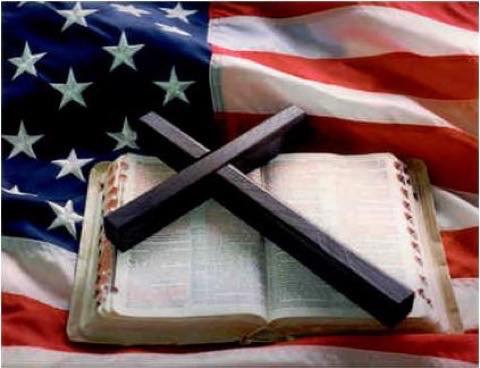
Revival or Bust

The First Great Awakening, the Second Great Awakening, the Welsh Revival, and America’s Jesus Movement all began with ordinary people becoming deeply dissatisfied with the emptiness of the world around them and turning toward Christ.

Today’s generation faces its own unique crises.

Anxiety, depression, addiction, family breakdown, identity confusion, economic uncertainty, and endless cultural upheaval have left many wondering whether there is something more than the promises offered by modern society.

The Gospel answers that question with a resounding yes.

It offers forgiveness where there is guilt.

Hope where there is despair.

Purpose where there is confusion.

Peace where there is fear.

That message never goes out of style because the deepest needs of the human heart never change.

Technology changes.

Culture changes.

Political movements rise and fall.

But humanity’s need for redemption remains exactly the same.

Thirty thousand people gathering in Angel Stadium is encouraging not simply because of the size of the crowd, but because it challenges the growing assumption that America has permanently lost interest in Christianity.

Perhaps the interest never disappeared.

Perhaps millions were simply waiting for someone to invite them.

Jesus instructed His followers to “go into all the world and preach the gospel.” That command has never been limited to church buildings, nor has it expired with changing technology. Whether through stadiums, college campuses, beaches, living rooms, or digital platforms, the mission remains unchanged.

The message of the Gospel is the same today as it was yesterday. True salvation comes as we see our need and respond to the only one who can change our circumstances and give us a new life! The Lord has not moved from humanity, humanity has distanced itself from Jesus.

John 14:6 “I am the way, the truth and the life; no one come to the Father but through me.”

He is just waiting patently. Romans 10:9-10 Rh

Georg Whitefield (Revivalist in Colonial America)

Beginning in 1740, George Whitefield preached seven times in America. He spread the Great Awakening Revival, which helped unite the Colonies prior to the Revolutionary War.

Whitefield‘s preaching stirred crowds with enthusiasm, which was criticized by the formal, established churches of the day. When they closed their doors to him, Whitefield began preaching out-of-doors. Crowds grew so large that no church could have held the number of people, sometimes being as large as 25,000.

In one sermon, George Whitefield proclaimed:

“Never rest until you can say, ‘the Lord our righteousness.’ Who knows but the Lord may have mercy, nay, abundantly pardon you? Beg of God to give you faith; and if the Lord give you that, you will by it receive Christ, with his righteousness, and his all … None, none can tell, but those happy souls who have experienced it with what demonstration of the Spirit this conviction comes …”

“Oh, how amiable, as well as all sufficient, does the blessed Jesus now appear! With what new eyes does the soul now see the Lord its righteousness! Brethren, it is unutterable … Those who live godly in Christ, may not so much be said to live, as Christ to live in them … They are led by the Spirit as a child is led by the hand of its father … They hear, know, and obey his voice … Being born again in God they habitually live to, and daily walk with God.”

George Whitefield was one of the first ministers to publicly preach the Gospel to slaves. This profoundly influenced many preachers, such as Rev. Samuel Davies, and denominations, such as Baptists, Methodists and Quakers, to be inclusive of blacks.

A young black teenager named John Marrant heard Whitefield preach in Charleston, South Carolina. Marrant converted and went on to become one of America’s first black preachers, even preaching among Cherokee, in England and in Nova Scotia.

George Liele, a black slave in Georgia, heard a Great Awakening preacher. He converted and began preaching with such conviction that his master freed him. Liele founded one of America’s first black churches–Silver Bluff Baptist Church in Beach Island, South Carolina, 1773, and then became one of America’s first foreign missionaries, arriving in Jamaica in 1792.

George Whitefield advocated for the improvement of the treatment of slaves, though he sadly held the typical 18th century view which accommodated the institution of slavery.

It was not until 1770 that Pennsylvania Quaker Anthony Benezet pioneered the movement to abolish slavery by founding the Negro School at Philadelphia, and, in 1775, the Society for the Relief of Free Negroes Unlawfully Held in Bondage, of which Franklin became the president in 1785.

Benezet’s school was inspired by Whitefield, who had first proposed in 1739 that Philadelphia have a Charity School for blacks and poor orphan children. Franklin later merged the Charity School with his newly formed Academy of Philadelphia.

Franklin helped finance the building of an auditorium for Whitefield to preach in, after which it became one of the first buildings of the Academy, which turned into the University of Pennsylvania.

I am praying for another Great Awakening in the United States to bring repentance and restoration. Our nation has had at least three great moves of God. Lord we pray for one more! We you join with me to see one last move of God before it is too late. Every major issue that divides our land is a moral issue. It will take moral solutions, not political ones. Rh