US MILITARY SUPERIORITY

BELOW are excerpts from two different scourges as to how the raid to capture Manduro happened. Again not officially confirmed but I do trust one of the sources. If true, it is an example of the technology that is out there for our military. We always see the tech for our armed forces is far ahead of civilian uses. If true it would expose the Russian and or possibly China defense systems that are inadequate. We know how easy Iran’s defense systems were rendered useless last summer during the 12 day war.

This account from a Venezuelan security guard loyal to Nicolás Maduro is absolutely chilling—and it explains a lot about why the tone across Latin America suddenly changed.

Security Guard: On the day of the operation, we didn’t hear anything coming. We were on guard, but suddenly all our radar systems shut down without any explanation. The next thing we saw were drones, a lot of drones, flying over our positions. We didn’t know how to react.

Interviewer: So what happened next? How was the main attack?

Security Guard: After those drones appeared, some helicopters arrived, but there were very few. I think barely eight helicopters. From those helicopters, soldiers came down, but a very small number. Maybe twenty men. But those men were technologically very advanced. They didn’t look like anything we’ve fought against before.

Interviewer: And then the battle began?

Security Guard: Yes, but it was a massacre. We were hundreds, but we had no chance. They were shooting with such precision and speed… it seemed like each soldier was firing 300 rounds per minute. We couldn’t do anything.

Interviewer: And your own weapons? Didn’t they help?

Security Guard: No help at all. Because it wasn’t just the weapons. At one point, they launched something—I don’t know how to describe it… it was like a very intense sound wave. Suddenly I felt like my head was exploding from the inside. We all started bleeding from the nose. Some were vomiting blood. We fell to the ground, unable to move.

Interviewer: And your comrades? Did they manage to resist?

Security Guard: No, not at all. Those twenty men, without a single casualty, killed hundreds of us. We had no way to compete with their technology, with their weapons. I swear, I’ve never seen anything like it. We couldn’t even stand up after that sonic weapon or whatever it was.

Interviewer: So do you think the rest of the region should think twice before confronting the Americans?

Security Guard: Without a doubt. I’m sending a warning to anyone who thinks they can fight the United States. They have no idea what they’re capable of. After what I saw, I never want to be on the other side of that again. They’re not to be messed with.

Interviewer: And now that Trump has said Mexico is on the list, do you think the situation will change in Latin America?

Security Guard: Definitely. Everyone is already talking about this. No one wants to go through what we went through. Now everyone thinks twice. What happened here is going to change a lot of things, not just in Venezuela but throughout the region. Source

Venezuela Air Defense

Very interesting post copied from Amir Tsarfati’s Telegram account. Amir is an expert in Middle Eastern affairs having been a former member of the IDF with great contacts in intelligence. Rh

Venezuela from the Russian perspective

It is difficult to overstate the level of frustration across Russian social media over the American move in Venezuela. There is hardly a single Russian military blogger who has not addressed it. The reaction on the Russian side revolves around two main axes.

The first axis is dominated by frustration that, once again, Russian systems – especially Russian air-defense systems – were caught completely unprepared. Russian commentators complain that, once again, their allies proved incompetent and unable to properly operate the equipment they were given, making Russian hardware appear ineffective.

Added to this is concern over the geopolitical consequences: the Maduro regime was seen as a close ally of the Kremlin – and that ally is now gone. Another fear frequently raised is that once infrastructure is restored, the United States could impose a global oil price ceiling of roughly $50 per barrel due to its control over production in Venezuela.

The second axis is captured by the most common phrase circulating on Russian Telegram over the past week:

а что так можно?

“So… you can actually do that?”

Despite everything mentioned above, most of the Russian frustration stems from the fact that the Americans succeeded precisely where the Russians failed. Anger over the successful arrest of Maduro is almost always accompanied by sharp criticism of the Kremlin’s actions at the start of the war and Russia’s failed attempt to seize Kyiv.

In the image: a modern Russian-made Buk air-defense system in Venezuela after receiving American “treatment”.

(David Lisovtsev)

Round Two??

Over the past several hours, dozens of U.S. Air Force aerial refueling tankers and heavy military transport aircraft – specifically C-5 and C-17 platforms – have departed from the United States and from a U.S. airbase in the United Kingdom, heading toward the Middle East.

According to multiple sources, the United States is preparing for strikes against Iran, and this activity reflects the ongoing transfer of forces to the region.

Iran Updates

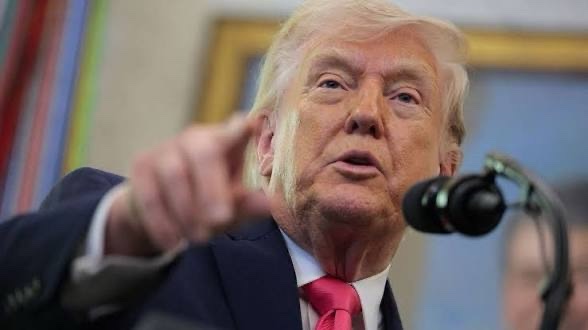
“If Iran shots and violently kills peaceful protesters, which is their custom, the United States of America will come to their rescue. We are locked and loaded and ready to go. Thank you for your attention to this matter!” – President DONALD J. TRUMP

Trump, Maduro, Iran Protests, and America First – Please Read and Share This Short Analysis copied from Amir Tsarfati

President Trump’s America First policy is fundamentally different from the version promoted by commentators such as Tucker Carlson.

In Trump’s view, one cannot ignore the reality that foreign actors are actively undermining the United States. The 90-minute operation in the Venezuelan capital and its surrounding areas was not a war; therefore, Congress was neither informed nor asked to approve it. It was a law-enforcement action – a swift removal of a destabilizing domestic agitator.

Judging by the president’s own words, regime change was not the objective. Rather, the goal was a complete change in policy.

Three considerations were at the forefront, none of which had anything to do with Israel’s concerns regarding Venezuela. From Trump’s perspective, the issues were drugs, illegal immigration by criminals, and oil that was unjustly taken from American companies.

Trump’s priority is to keep America free of drugs and gangs while maintaining a strong, thriving economy. He did not remove Maduro because of his ties to Iran or Hezbollah – at least not according to his statements or those of his secretary of war. Any genuine regime change in Venezuela, he argues, must come from within, through free and non-fraudulent elections.

Now let’s turn to Iran.

The United States will not initiate a war with Iran simply because of internal unrest or popular protests. American intervention would occur only if the Iranian regime poses a direct threat to U.S. interests. In practical terms, threats against American allies, U.S. bases, or U.S. assets are the triggers that could lead the 47th president to authorize another round of B-2 operations over the skies of the Islamic Republic.

From Trump’s perspective, an Israeli strike could once again serve as the catalyst – not to pursue regime change, but to reinforce deterrence. A follow-on U.S. B-2 presence would signal unmistakably to Tehran that continued aggression, including the killing of its own civilians, carries severe consequences. The objective would be pressure, not overthrow: pushing the regime to halt repression and recalibrate its behavior.

Israel, however, does not have the luxury of waiting.

Israel cannot afford to watch the ayatollahs accumulate thousands of ballistic missiles while renewing their nuclear ambitions – all while already possessing roughly 400 kilograms of uranium enriched to 60%.

Therefore, in my assessment, another round involving Iran is very close – literally around the corner. For Israel, it would be about removing existential threats. For Trump, it would be about restoring deterrence and forcing restraint.

Unfortunately, according to Scripture, Iran will come against Israel in the near future as part of an emerging coalition led by Russia. Until then, the regime will attempt to survive – waiting patiently for the end of Trump’s presidency, counting on the assumption that his successor’s worldview will be closer to that of Tucker Carlson.

(IMO). I totally concur, I don’t see us doing a regime change in Iran, however Israel will need to strike again and what happens after that is anyone’s guess.

On Venezuela, it’s more than just narco-terrorist there, Russia, China and Iran have interests there. Is there weaponry or launch capabilities in country?? Who knows, I am sure the US military knows. Exciting times to live in. I have been preaching about these days since I was a young man. Maranatha! Rh

Ambassador Huckabee: ‘Iran didn’t get the message’

Interview with Mike Huckabee

December 22, 2025

Source: Israel National News

Iran will never stop trying to make a bomb. Everybody with half a brain knows that. Why Trump and Netanyahu did not go ahead and finish the job, it will take regime change in Iran for anything to be different when it comes to their hatred for Israel and the United States. Mark my words a strike on Iran will have to happen one more time. And let’s hope this time the job is finished, just like the job in Gaza with Hamas should have been finished. Rh

US Ambassador to Israel Mike Huckabee said Iran remains a central national security concern for Washington, stressing that President Donald Trump has been unequivocal in opposing any Iranian path to nuclear weapons, during a wide-ranging interview with the Institute for National Security Studies (INSS).

Asked whether the US would support further Israeli military action should Iran move to cross nuclear or ballistic missile thresholds, Huckabee emphasized that such decisions are made at the White House level. However, he pointed to the President’s consistent public statements. “He consistently has said Iran is never going to enrich uranium and they’re not going to have a nuclear weapon,” Huckabee said, adding that the message has not changed following the recent conflict.

threat beyond Israel and the US, suggesting Tehran may only recently have begun to take US warnings seriously. “Iran, I don’t know that they ever took him seriously until the night that the B-2 bombers went to Fordow,” he said. “I hope they got the message, but apparently they didn’t get the full message because … they appear to be trying to reconstitute and find a new way to dig the hole deeper, secure it more.”

For full article: Israel National News

Mid-East Tidbits

Analysis in Turkey: The U.S. and Israel Are Operating in Syria While Turkey Is Being Pushed to the Margins

Turkish journalist Arslan Bulut argues that recent developments in Syria illustrate a clear axis of cooperation between the United States and Israel, while Turkey finds itself increasingly constrained on the ground.

According to Bulut, Washington continues to operate in Syria through local forces, including the SDF, which is affiliated with the PKK, and uses them as a direct lever of pressure on Ankara.

Bulut notes that despite past public confrontations between Erdoğan and Israel, security relations have been maintained behind the scenes. Even today, he claims, Turkey effectively aligns its actions with the American-Israeli framework—in Libya, in Egypt, and especially in Syria.

He further argues that while U.S. forces operate freely in northern Syria, the Turkish army is restricted in its ability to move southward, which in his view indicates an erosion of Ankara’s regional standing.  (Turkey Today) Turkey is still one to watch in the Middle East, Erdogan still believes he could be the last Mahadi (world Islamic leader), at least he has a vision of that.  They still want in on the Gaza peace force.  Israel says no. Rh

Prime Minister Netanyahu and President Trump will discuss another strike on Iran – against the backdrop of growing concern in Israel about the pace of recovery at the nuclear sites and the Iranian missiles that were damaged in the 12-day war.  (NBC). Just as suspected, the Israeli/American military was not finished in Iran.  Force and complete defeat is all the tribes there understand.  Iran may be harmed, but a desperate animal can do lots of damage.  Will have to be dealt with soon.  Rh

DNI Tulsi Gabbard says the greatest threat to freedom is Islam: 

“The greatest near and long term threat to our freedom is the threat of Islamist ideology.”  Pleasantly surprised she may be the best of all Trump’s cabinet picks, no flowery political speech from her. Rh

This is huge news on The Third Temple in Israel.

Israel Today is reporting that “Israelis of priestly descent practice their biblical duties at a scale model of the Temple altar, at a facility near Maaleh Adumim on the eastern outskirts of Jerusalem.”  Big news on the prophetic front here.  We know in the middle of the Tribulation the anti-christ sets himself up as God in the 3rd temple in Jerusalem.  That will cause a new turn toward Jehovah God for the Jews.  Some will flee to a place in the wilderness where God will protect them in safety.  Probably Petra. (Revelation 12:6,14).  Things are moving fast as we speak.  Acceleration?  God’s timing?  Look up our redemption draws near. (1 Thessalonians 4:13-18).  Rh

Vice President Vance in an interview:

“99% of Republicans – and, I believe, probably 97% of Democrats – do not hate Jews because they are Jews. What is actually taking place is a genuine backlash against the long-standing consensus in American foreign policy. We need to have this conversation rather than attempt to silence it. Most Americans are not antisemitic, will never be antisemitic, and we should focus on the real debate. 

“May I say your are wrong Mr. Vice President, your “idea” and premise is wrong.  If that were so, the antisemitism attacks here in America and the degenerate podcasters  who push Israel blood libels etc would not have such a huge following.  Sir your friend Tucker Carlson has had holocaust deniers and himself has spoken evil and hatred toward the Jews just because of who they are.  Christian Conservatives hear you, and will remember come 2028.  Our foreign policy is NOt the issue, it is those who hate the Jews.”  Rh

When disinformation and conspiracy theories spread unchecked, the poison is already in the system – and doubt inevitably follows.

Israel can – and will – survive without America.

Those are not my words; they are God’s Word. Read Ezekiel 38.

The real question is not whether Israel can survive without America, but whether any nation can survive without standing with Israel.

Read Zechariah 14 again – especially its latter portion – and then draw your conclusion.

Israel was, is, and never will be a perfect nation.

Yet the God of Israel has never sought anyone’s approval for why He continues to use them in such a powerful way. He works in mysterious ways so that He alone receives the glory.

Consider how Romans 11 concludes:

“Concerning the gospel they are enemies for your sake, but concerning the election they are beloved for the sake of the fathers. For the gifts and the calling of God are irrevocable. For as you were once disobedient to God, yet have now obtained mercy through their disobedience, even so these also have now been disobedient, that through the mercy shown you they also may obtain mercy. For God has committed them all to disobedience, that He might have mercy on all.” AMIR TSARFATI

‘They Sponsor Terrorism’: Trump Moves to Target Muslim Group Following Startling Report by Paul Petitte – CBN News

JERUSALEM — The Muslim Brotherhood is an Islamic terror group so dangerous that it’s banned in Saudi Arabia, Syria, and Egypt. This year in the U.S., Texas and Florida designated the group a foreign terrorist organization. In the coming days, the Trump administration is expected to do the same.

President Donald Trump’s executive order beginning the process of designating the Muslim Brotherhood as a terrorist organization follows a lengthy report by the Institute for the Study of Global Antisemitism and Policy, known as ISGAP.

The report, nearly 200 pages long, argues that the Muslim Brotherhood has spent decades advancing what it calls a “civilization jihad” aimed at undermining democratic institutions in the United States and the West.

“This is an organization that believes in murdering Jews, destroying Israel, and destroying the United States of America,” said Dr. Charles Asher Small, the founder and director of ISGAP. “This is their objective.”

Founded nearly a century ago in Egypt, the Muslim Brotherhood now operates across the Middle East. Hamas originated as the group’s Palestinian branch, according to the report.

In November, Small appeared alongside lawmakers and scholars to warn that the Brotherhood is “more than halfway through” what ISGAP describes as a 100-year plan to erode democratic societies from within.

“They sponsor terrorism, murder, and mayhem across the planet,” said U.S. Ambassador to Israel Mike Huckabee at a recent Knesset prayer event. “They are a very negative and destructive force, and it’s very important for the United States to use its power and influence to call them out for what they are.”

The ISGAP report focuses heavily on what it describes as the Brotherhood’s influence operations in the West, particularly in academia. It alleges that groups such as the Muslim Students Association and Students for Justice in Palestine serve as vehicles for spreading the organization’s ideology. The report cites Students for Justice in Palestine as a major force behind violent anti-Israel protests at Columbia University.

Small pointed to the election of Zohran Mamdani as mayor of New York City as evidence of what he describes as long-term political penetration.
“He came out of SJP,” Small said. “He was a student activist for Students for Justice in Palestine at Bowdoin College. It’s important for your listeners to understand that SJP comes out of American Muslims for Palestine, which is a Muslim Brotherhood-backed organization.”

Trump’s executive order states that Muslim Brotherhood chapters in Lebanon, Jordan and Egypt pose a threat to U.S. national security interests.

Middle East analyst Dr. Mike Evans said he urged the administration to expand the scope of the order to include Brotherhood-linked activity in Syria, Turkey and Qatar.

“The Muslim Brotherhood and Qatar funded and fueled terror — al Qaeda, the Taliban, Iran and Hamas,” Evans said. “These people hate us.”

At the state level, decisions by Texas and Florida governors to label both the Muslim Brotherhood and the Council on American-Islamic Relations as terrorist organizations are currently being challenged in court.

Texas Gov. Greg Abbott cited past convictions tied to CAIR affiliates in defending the designation. “One of the founders of the Texas branch of CAIR was sent to prison for 65 years for financing terrorism,” Abbott said. “The fact of the matter is there are people associated with CAIR who pose a serious danger.”

Under Trump’s order, Secretary of State Marco Rubio and Treasury Secretary Scott Bessent must submit a joint report by the end of the year outlining next steps toward a formal designation.

The Muslim Brotherhood is already banned as a terrorist organization in Saudi Arabia, the United Arab Emirates, Russia, Syria, and Jordan. However, the ISGAP report says Brotherhood-linked organizations continue to operate freely in Turkey and Qatar, funding media outlets and political influence campaigns worldwide.

“Qatar is buying favor with the BBC, CNN, and other media outlets, including Al Jazeera, and it’s now into our political system,” Small said.

Evans said a formal U.S. designation would dramatically limit the group’s global reach. “It’s a game changer,” Evans said. “When you designate a terrorist organization, they can’t move anymore. They have no room to operate.”

Israeli Prime Minister Benjamin Netanyahu has praised Trump’s initiative and indicated Israel may follow with its own designation.

Israeli Deputy Foreign Minister Sharren Haskel warned that radical Islamist groups have been clear about their long-term goals. “We’ve seen the movements of radical jihadist groups who say very clearly that what they seek is the destruction of Western civilization as we know it today,” Haskel said.

The Unsettled Middle East

As always it seems the chaos of the Middle East leads my concerns for the upcoming weeks. Israel is still trying to consolidate their victories, U.S. still seems to be reaching toward the Arabs, Muslim etc. for deals and investments. Not sure I would want to get in bed with radicals. Trump seems not to notice their bad behavior. Deals made, but no money yet? All eyes will continue to be on Jerusalem that, as Bible prophecy indicates, is a stone of stumbling for the nations. Iran’s still a threat, Hezbollah still not disarmed, and Hamas still playing the same old games. Will we never learn? No, I don’t think so. Deals with deceit will never work. Time to unleash the firepower and finish the job. We are almost back where we started. Pray for the peace of Jerusalem. Content below taken from http://www.billkoenig.com

Trump, Netanyahu, the UN, and Iran: A High-Risk Week for Israel

This was one of the most geopolitically consequential weeks of the year for Israel, marked by unusual U.S. messaging, UN momentum against Israeli sovereignty, and large-scale military posturing by Iran. As the region reconfigures itself politically and militarily, Israel faces a tightening strategic environment that will require clarity, resolve, and decisive policy judgment.

Trump Pushes for Netanyahu Pardon — While Warning Israel on Syria

Former U.S. President Donald Trump continued publicly calling for Prime Minister Benjamin Netanyahu to be pardoned of all charges related to his ongoing corruption trials in Israel. Trump framed the cases as politically motivated, urging closure for the sake of Israeli stability and unity.

However, the tonal contrast of the week was unmistakable.

Even as Trump advocated for Netanyahu’s legal relief, he personally warned Israel not to intervene militarily inside Syria, signaling that Washington does not want Israeli action disrupting sensitive regional balances — particularly where Russian, Iranian, and Syrian forces intersect.

This dual posture — unconditional rhetorical support for Netanyahu as an individual, paired with caution toward Israeli military activity — reflects Trump’s realpolitik approach: transactional, flexible, and often unscripted. For Israel, it presents both opportunity and risk.

Strong backing for Netanyahu is politically valuable, but a U.S. administration urging operational restraint in Syria could create strategic handcuffs precisely when Iran is embedding itself deeper across the northern theater.

UN Empowered Through Gaza Deal — and Moves Against Golan Heights

Trump’s Gaza stabilization plan has effectively re-elevated the United Nations into a central role in Gaza administration and long-term conflict architecture. The UN, after years of diminished influence, is suddenly positioned again as a gatekeeper for post-conflict arrangements.

The consequences were immediate.

This week, the United Nations General Assembly passed a resolution calling for Israel’s withdrawal from the Golan Heights — one of the most strategically vital security buffers Israel possesses. The timing could not be more significant:

• A UN empowered by the Gaza framework

• A UN resolution targeting sovereignty over the Golan

• An international system once again conditioned to pressure Israel

For decades, the Golan Heights has been Israel’s northern shield — the high ground preventing Syrian and Iranian forces from threatening Galilee. A UN-backed withdrawal demand signals that international campaigns to erode Israel’s territorial legitimacy are escalating again.

Trump’s deal may have been designed for stabilization, but its practical outcome is that the UN now possesses renewed authority to define territorial questions, which historically has not favored Israel.

The Strategic Danger of Non-Ideological Foreign Policy

Unlike administrations with clearly defined pro-Israel ideological foundations, Trump’s foreign policy operates on pragmatic deal-flow, not doctrinal alignment. That flexibility can generate agreements — Abraham Accords proved that — but it also risks exposing Israel to rapid shifts in U.S. posture.

Non-ideological diplomacy means alliances are fluid, conditional, and transactional.

This week demonstrated that fluidity. Support for Netanyahu’s pardon suggests closeness. Warnings on Syria and a UN-empowering Gaza framework signal distance. Together, these create uncertainty — and uncertainty is a battlefield advantage for Iran, Hezbollah, and the UN diplomatic bloc.

Israel is entering a moment where the greatest threat may not be military — but diplomatic isolation combined with strategic ambiguity from its closest ally.

Iran Simulates War — and Threatens 2,000-Missile Barrage

Iran, sensing the moment, staged large-scale military exercises in the Gulf of Oman, firing ballistic and cruise missiles at simulated targets designed to reflect wartime conditions.

Just weeks ago, Iranian officials warned that if war with Israel erupts, Tehran would unleash 2,000 missiles at the same time — a saturation attack intended to overwhelm Iron Dome, David’s Sling, Arrow, and the multilayer missile defense grid.

The 12-day war already demonstrated what smaller barrages can achieve. Two thousand simultaneous launches would represent a magnitude beyond anything Israel has ever faced.

Iran is signaling capability, intent, and confidence.

Northern Front — Israel vs. Hezbollah

In the shadow of Iran’s drills, Israel continued striking Hezbollah infrastructure inside Lebanon, targeting launch sites, weapons depots, and command channels. Hezbollah is relentlessly working to reconstitute its arsenal and precision-missile capacity, seeking parity or superiority in a future war.

Israel, fully aware of this trajectory, is racing to degrade Hezbollah faster than Hezbollah can rebuild.

This is a detention-attrition cycle — but one inch away from a regional ignition point.

Israel & Iran Part 2

Israel and Iran are reportedly preparing for another war, although some analysts say it may not happen immediately. At the same time, the situation in Gaza appears frozen, with little progress on the ceasefire agreement and rising tensions in other Palestinian areas of the West Bank.

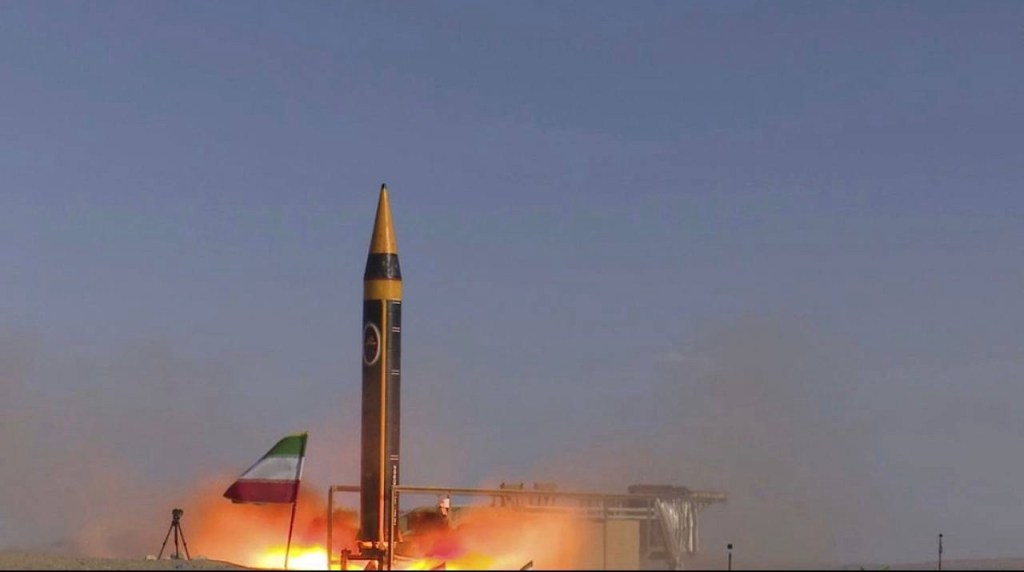
Iranian officials say their missile factories are operating around the clock because they hope to launch 2,000 missiles at once “to overwhelm Israeli defenses, rather than 500 over 12 days” as they did in June.

FULL STORY: cbn.com/news/israel

Peace is stalled in Gaza, or should I say never took hold. Experts believe Gaza could be divided for years between the IDF control and Hamas control of the strip. Rh

Hamas officials meet Turkish intel chief in Istanbul

The Islamist group reiterated it commitment to the Gaza truce and discussed civilian needs and governance with Turkish mediators.

Copied from JNS.org

On Sept. 19, I wrote a commentary entitled “Turkey: A Rogue Nation On The Rise,” in my blog. If you haven’t read it, it may give some fact and opinions about the positions of Turkey. In face Israel has just as much and in some cases more to fear from them as they do Iran and Russia. Food for thought. Rh

(Nov. 6, 2025 / JNS)

A Hamas delegation led by senior official Khalil al-Hayya met with Turkish National Intelligence Organization (MİT) Director İbrahim Kalın in Istanbul, the Palestinian terrorist organization said on Thursday.

According to the statement, the two sides discussed the implementation of the Gaza ceasefire, reopening of border crossings and humanitarian aid efforts.

The Islamist group reaffirmed its commitment to the U.S.-brokered truce and addressed next steps for Gaza’s reconstruction, including sewage, roads and electricity infrastructure. Talks also covered the possible handover of Gaza’s administration to an independent Palestinian committee and the ongoing challenges of what the terror group claims are Israeli ceasefire violations.

Jerusalem has accused Hamas of multiple ceasefire violations since the first stage of the agreement went into effect last month, including terrorists crossing the Yellow Line into IDF-controlled Gaza and attacking troops, and Hamas slow-walking the return of the remains of hostages it murdered.

Last week, the same Hamas representatives met with Turkish Foreign Minister Hakan Fidan in Istanbul to advance details of the ceasefire agreement.

Jerusalem opposes any involvement by Turkey or Qatar in the reconstruction of Gaza, citing both countries’ support for Hamas and their hostility toward Israel. Turkish President Recep Tayyip Erdoğan has repeatedly used inflammatory rhetoric against Israel since the Oct. 7, 2023, Hamas-led attack and throughout the Gaza war, and Ankara has imposed a series of anti-Israel measures, including a trade boycott.