Beloved of God

 To Him who loved us: What a beautiful title for Jesus! When loved is used, in the past tense, it points back to a particular time and place where Jesus loved us. It should be pointed out that many translations have loves us (such as NASB, NIV, and NLT), but there is something beautiful about loved us. It looks back to the cross. Every believer should be secure in God’s love, not based on their present circumstances (which may be difficult), but based on the ultimate demonstration of love at the cross. This is worth praising Jesus about.

Paul put it like this in Romans 5:8: But God demonstrates His own love toward us, in that while we were still sinners, Christ died for us. The work of Jesus on the cross for us is God’s ultimate proof of His love for you. He may give additional proof, but He can give no greater proof.

No wonder many believers are not secure in knowing the love of Jesus towards them – they look to their present circumstances to measure His love. Instead, they need to look back to the cross, settle the issue once for all, and give praise to Jesus, to Him who loved us.

And washed us from our sins in His own blood: This is what happened when Jesus loved us at the cross. He washed us – cleansed us from the deep stain of sin, so that we really are clean before Him. This is worth praising Jesus about.

If we understand our own deep sinfulness, this seems almost too good to be true. We can stand clean before God – clean from the deepest of stains. No wonder the same Apostle John also wrote, If we confess our sins, He is faithful and just to forgive us our sins and to cleanse us from all unrighteousness(1 John 1:9).

In His own blood: If there were any other way to wash us from our sins, God would have done it that other way. To wash us in His own blood meant the ultimate sacrifice of God the Son. God wouldn’t do it this way unless it was the only way. “The priests could only cleanse with blood of bulls and goats; but he has washed us from our sins ‘in his own blood.’ Men are willing enough to shed the blood of others. How readily they will enter upon war! But Christ was willing to shed his own blood, to pour out his soul unto death, that we might be saved.” (Spurgeon)

Notice the order: first loved, then washed. It wasn’t that God washed us out of some sense of duty and then loved us because we were then clean. He loved uswhile we were dirty, but then He washed us.

In fact, washing proves love. If you had an old pair of pants, and got them covered in paint, you would only wash them and keep them for two reasons. First, you might wash them and keep them if you were poor. You can’t or won’t spend money on another pair of pants, so you wash them and keep them. Second, you might wash them and keep them if you really loved those old pants. Money isn’t the issue. You could go down and buy a new pair of pants any time; but you love that pair so much that you spend the time and the effort to clean them, and use them again. God loves us so much that He washed us. God certainly is not poor. With merely a thought, He could obliterate every sinner and start over with brand-new creatures. But He doesn’t. He loves us so much that He washed us.

Some scholars believe that John wrote and loosed us from our sins. There is only one letter different between the words washed and loosed in the ancient Greek language. Both words show up in ancient manuscripts, so it’s hard to say which one John wrote. Nevertheless, both are true – we are both washed and loosed from our sins.

And has made us kings and priests to His God and Father: This is status Jesus gives to those whom He loved in His work on the cross and who are washed… in His own blood. It would have been enough just to love them and cleanse them. But He goes far beyond, and makes us kings and priests to His God and Father. This is more than Adam ever was. Even in the innocence of Eden we never read of Adam among the kings and priests of God. This is worth praising Jesus about.

We are kings, so we are God’s royalty – this is privilege, status, and authority. We are priests, so we are God’s special servants. We represent God to man and man to God. We offer sacrifice unto Him (Hebrews 13:15). We have privileged access to God’s presence (Romans 5:1-2).

Kings and priests: In the Old Testament, it was forbidden to combine the offices of king and priest. King Uzziah of Judah is an example of a man who tried to combine the two offices, and paid the penalty for it (2 Chronicles 26:16-23). Under the New Covenant, we can be like Jesus in the sense that He is both King and High Priest (Luke 1:31-33; Hebrews 4:14).

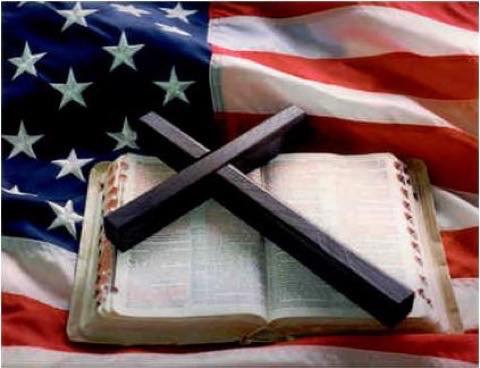
Lawmakers and Christians Unite In Prayer For America

Lawmakers, christians, Pastors and CEOs gathered this past week in D.C. to call for repentance and prayer for our nation. We are facing a serious spiritual battle over our country.  Not only have we lost a fear (reverence) of God, we are openly rebelling against what has always been the moral norm in society.  Our churches have become a moral quagmire with erroneous doctrines being preached as truth. Our governmental officials are doing not the “will of the people,” but for their own greed and lust for power.   Hanging on to the lust for power until they crumble and fall from failing health right before our eyes.  

Our battle is spiritual.  As believers we hold the key to the renewal of the United States and the world.  God is not finished with us, but time is running out.  It is time to put off our notions of greatness, humble ourselves, and ask the Lord Jesus Christ to forgive us our corporate sins, and bring a newness and renewal to our nation.  

WE are in need of forgiveness, repentance and a turning back to the Judeo-Christian values that made America the envy of the world.  God has blessed us to the extent that, IMO we think we are above retribution for a Holy God!  God is not mocked, “for whatsoever a man or nation sows, they shall also reap.”  God have mercy upon us.  Forgive us and restore us….Amen!  Rh

The Remnant Church – Shifts & Divisions 2026

Good morning and God bless each and everyone who follows my blog or reads the content.  We are entering into a most divisive and profound year, (IMO). As I look forward to the new year I see two rivers running side by side.  One is righteous, because of the blood of Jesus, the other one is evil filled with the influence of the spirit of anti-christ. The other gospel is one of false hope, prosperity and a God of love that winks at our sin. Compromises the authority and inerrancy of the Gospel. Paul spoke clearly about this in the book of Galatians. “But even if we, or an angel from heaven, preach any other gospel to you than what we have preached to you, let him be accursed.”

‭‭Galatians‬ ‭1‬:‭8‬ ‭NKJV‬‬

Division in the church is not new, however I sense in my spirit it will become profound in the coming year.  We are ripe for the Holy Spirit to divide sheep from the goats.  The Church, as a whole, is confounded by the purity of the Gospel.  Another gospel is being preached. One of love, not holiness, one of acceptance not dedication, one of peace and prosperity when we are in time of war, (Spiritual War) is upon us.

Limp wristed tip toe through the tulips watered down Christianity is a stench in the nostrils of a Holy God.  “Because you say, ‘I am rich, have become wealthy, and have need of nothing’—and do not know that you are wretched, miserable, poor, blind, and naked— I counsel you to buy from Me gold refined in the fire, that you may be rich; and white garments, that you may be clothed, that the shame of your nakedness may not be revealed; and anoint your eyes with eye salve, that you may see.”

‭‭Revelation‬ ‭3‬:‭17‬-‭18‬ ‭NKJV‬‬

Hebrews 12:14b “without holiness no one will see the Lord.”  A remnant of holiness will mark the true church in 2026.

  • Not “without love.”
  • Not “without good vibes.”
  • Not “without sincerity.”
  • Without holiness.
  • Because love is God’s gift to us, but holiness is our response to Him.
  • Holiness is “more than praying a standard prayer” repentance means change of heart
  • Cross not crowns
  • Holiness draws a line in the sand against sin
  • Love invites you to cross it.
  • Holiness requires you to change as you cross.

Daniel 11:32b “but the people who know their God shall be strong, and carry out great exploits.”  Knowing God brings intimate knowledge that empowers His people to do extraordinary, courageous acts for His glory,

The fire of the Holy Spirit will burn the chaff from our lives, it will cause a fire breathed anointing to the remnant church.  A “Holy” desire that brings us into the Lord’s presence.  The word remnant is only used twice for Israel in the New Testament, but never for the Church.  Awake and arise church, let us take our rightful place ruling and reigning with Christ in the heavenly places in the spirit realm. “and raised us up together, and made us sit together in the heavenly places in Christ Jesus,” Ephesians 2:6

‭Intercession and repentance that leads to holiness will be the standard for the remnant church in 2026.  Will you join me? 

Live in His Word, and Walk in His Spirit

Random Thoughts 9/24/25

For the testimony of Jesus is the spirit of prophecy: The true spirit of prophecy always shows itself in bearing witness to Jesus. “Any teaching of prophecy that takes our minds and hearts away from Him is not being properly communicated.” (Hocking)

i. “This means that prophecy at its very heart is designed to unfold the beauty and loveliness of our Lord and Saviour Jesus Christ.” (Valvoord). Never receive a word or believe a word without it being based on the Word of God. Too many wannabe’s out there. Be careful, and be not deceived. Rh

Revelation 19:15 Now out of His mouth goes a sharp sword: The idea isn’t that Jesus holds a sword in his mouth like a buccaneer, or that He is “spitting swords.” This is a dramatic way of referring to the power of His Word. “Christ conquers by the power of His Word” (Johnson). Five times in the Book Revelation, John emphasizes that Jesus’ sword comes out of His mouth. Once against it’s all about the Word, Psa. 138:2, John 1:1 Rh

Revelation 16:6-9 And I heard, as it were, the voice of a great multitude, as the sound of many waters and as the sound of mighty thunderings, saying, “Alleluia! For the Lord God Omnipotent reigns! Let us be glad and rejoice and give Him glory, for the marriage of the Lamb has come, and His wife has made herself ready.” And to her it was granted to be arrayed in fine linen, clean and bright, for the fine linen is the righteous acts of the saints. Then he said to me, “Write: ‘Blessed are those who are called to the marriage supper of the Lamb!’” And he said to me, “These are the true sayings of God.” I long for that day to sit in a Heavenly feast with the King of Kings and Lord of Lords. Rh

Passover: Jesus Is The Substance Behind Every Prophetic Shadow

ByAmir Tsarfati

This is a fairly long article.  Please read until the end.  It will bless you on this Resurrection weekend.   Amir is a Christian writer and speaker, who loves our Lord Jesus Christ. Rh

Did you know that God’s calendar actually begins with Passover? In Exodus 12:2, God tells Moses, “This month shall be your beginning of months.” God’s calendar could have started with the creation, the flood, Adam, or Abraham, but instead, He chose to start it with the Exodus from Egypt.

So much of Passover points to Yeshua—the lamb, the blood, the unleavened bread—it would be simpler to tell you what doesn’t point to Him! Today, I want to show you how these ancient symbols reveal our Messiah.

First, let me explain what the Passover Seder is. The word “Seder” in Hebrew means “order.” It’s the traditional meal and ceremony that Jewish families have observed for thousands of years to commemorate our deliverance from Egypt. While the Passover itself is commanded in scripture, the specific seder rituals and traditions developed over time in Jewish practice. During this special evening, we eat specific symbolic foods, drink four cups of wine, and tell the story of the Exodus to our children.

Did Jesus celebrate the Passover Seder? Absolutely! In Luke 22:15, Jesus says to His disciples, “With fervent desire I have desired to eat this Passover with you before I suffer…” Jesus not only celebrated it, He was eager to do so because He knew this ancient celebration was always about Him. This wasn’t just another religious ritual for Jesus; it was the moment He would reveal Himself as the fulfillment of everything the Passover represented.

Colossians 2:16-17 tells us that the festivals, new moons, and Sabbaths are “a shadow of things to come, but the substance is Christ.”

I want to show you how the Messiah is revealed in every symbol on the Passover plate and why this feast perfectly covers the timing of His death and resurrection—distinguishing him from any false prophet, false teacher, or false messiah.

Let’s go over the traditional seder plate the Jews have on their tables to this day. I promise you you won’t be left spiritually hungry today! Each element has incredible significance that points directly to our Messiah, Yeshua.

Blood Of The Passover Lamb

Let’s start with something fascinating about the Passover lamb and the blood that caused God’s judgment to pass over.

When God instituted Passover, He didn’t say, “The angel will pass over the houses of the Jews.” No, the instruction in Exodus 12:23 was clear: “And when he sees the blood on the lintel and on the two doorposts, the Lord will pass over the door and not allow the destroyer to come into your houses to strike you.” It wasn’t about ethnic identity; it was about the blood.

What if an Egyptian family had overheard Moses’s instructions and put lamb’s blood on their doorposts? I have news for you: their firstborn would have been spared! We are not saved by our ancestry or ethnicity. It’s not about the blood that runs within your veins; it’s about the blood you sprinkle on the doorpost of your heart.

Bones Of The Passover Lamb

The shankbone is a symbol of the Passover lamb. For generations, Jewish families sacrificed an innocent, unblemished male lamb. Paul, once a persecutor of the church, wrote in 1 Corinthians 5:7, “For indeed Christ, our Passover, was sacrificed for us.” When the scales fell from his eyes, he could see who the true Passover was.

According to Exodus 12:46, not one bone of the Passover lamb was to be broken, and when they came to Jesus on the cross, John 19:33 tells us, “But when they came to Jesus and saw that he was already dead, they did not break His legs.” He fulfilled the requirements perfectly.

Matzah Bread

On matzah bread, you notice stripes and piercings marked into it. Isaiah 53:5says, “But He was wounded for our transgressions, He was bruised for our iniquities; the chastisement for our peace was upon Him and by His stripes we are healed.” Zechariah 12:10 speaks of the One whom they pierced. This unleavened bread symbolizes the sinless life of Jesus.

Pay close attention to this: in every Passover seder, we have three matzahas placed together. The Jewish rabbis say they represent the priests, Levites, and the people (the Israelites), but why then do we take the middle one, break it, and hide half of it, this hidden piece we call the “Afikoman,” and later redeem it for a reward? If this isn’t about the Father, Son, and Holy Spirit—with the Son being broken for us and hidden for a time—what is it?

The word “Afikoman” actually comes from Greek; it means “what comes after” or “that which comes later.” Jesus is still hidden from His own people, but the day will come when all Israel will recognize Him and be saved.

When rabbis are asked why they break the middle matzah, they simply say, “That’s our tradition!” But traditions always have origins and meanings. This tradition perfectly pictures our Messiah who was broken for us, hidden, buried, and then returned resurrected.

Bitter Herbs

The bitter herbs remind us of the suffering of our ancestors in Egypt, but they also remind us of the bitter cup Jesus drank in Gethsemane when He said, “My soul is exceedingly sorrowful, even to death” (Matthew 26:38). Be willingly took that bitter cup for us.

Four Cups Of Wine

The four cups of wine each represent a promise from Exodus 6:6-7. God would bring Israel out, rescue them, redeem them, and take them as His people. The cups represent sanctification, judgment, redemption, and praise.

During the last supper, something incredible happened. Jesus took the first cup as normal, but then he did something unexpected. He skipped the second cup—the cup of judgment. Why? Because He was about to go to Gethsemane to drink that cup alone for us. Instead, after supper, He took the third cup—the cup of redemption—saying, “This cup is the new covenant in my blood, which is shed for you” (Luke 22:20). What grace! He took the judgment so we could have redemption.

When you take communion, you’re not participating in some man-made ritual; you’re connecting to this ancient celebration of God’s redemptive plan. The cup and bread that Jesus used to institute communion were part of this Passover meal.

Here’s a thought that will blow your mind: when Jesus shed blood for the first time, it wasn’t on the cross; it was in the garden of Gethsemane, where Luke 22:44 tells us, “His sweat became like great drops of blood falling down to the ground.” The first Adam sinned in a garden, bringing death. The last Adam suffered in a garden, bringing life!

An Empty Seat For Elijah

Jewish people set an empty seat for Elijah, waiting for him to announce the Messiah. But Jesus tells us in Matthew 17 that Elijah already came through John the Baptist. The messenger has come, and so has the Messiah.

He fulfilled his role as suffering servant and will return as conquering King.

Singing ‘Dayenu’

During the seder, we sing Dayenu, meaning “It Would Have Been Enough.” Each line of the song declares, “It would have been enough,” but God gave more! As believers, we can say, “If you had only forgiven our sins, Dayenu, but He also made us children of God and co-airs with Christ.”

Even facing crucifixion, Jesus still sang the Passover hymns in His darkest hour. Our Messiah praised God. Psalm 116:13 says, “I will take up the cup of salvation, and call upon the name of the Lord.” This is what Jesus did for you and me. He took that cup of salvation, drank the cup of judgment, and now offers us eternal life.

The Substance Behind Every Prophetic Shadow

What makes Jesus fundamentally different from any false messiah? He died as our Passover lamb, precisely on Passover day, at the exact time the temple lambs were being slaughtered. He was buried during the feast of unleavened bread, symbolizing his sinless body. He rose on the feast of first fruits. No human could orchestrate this divine timing. Only the true Messiah, who established these feasts with Moses 1,500 years earlier, could fulfill them with such precision.

Friends, the mystery of the Messiah, hidden for ages, is now revealed. He is the substance behind every prophetic shadow. These feasts were prophecies in action that only the true Messiah could fulfill to the letter.

God is not after the rituals, He wants hearts that recognize His Son. I pray that you will see through the beauty of Passover how God planned your salvation from the very beginning and how only through Him can we “Passover” from death to life.

Amir Tsarfati is a fmr Deputy Governor of Jericho, Israeli tour guide, author, and the Founder and President of Behold Israel.