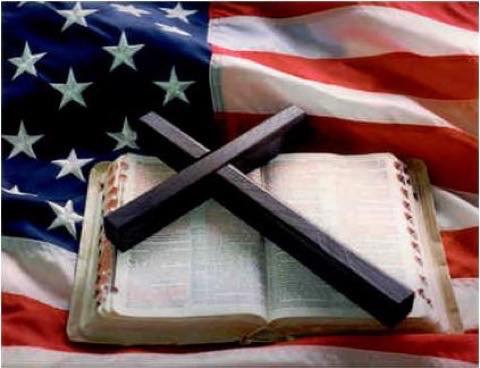
So excited to see this happening. May God continue to move across this nation! Rh
Tag: life
ControllingThe Narrative
Leftists and progressives know that what people believe to be true shapes and controls them, whether it is true or not. In other words, people are not controlled by truth – they’re controlled by what we believe to be true! Language shapes culture. Words influence thinking, thinking forms beliefs, beliefs create actions, and actions shape the culture. Pretty simple.
Some have said that until you hear something over and over you never really grasp the concept of what you heard. Rehearsing in your mind. What you think, or believe becomes a part of you. That is why the “mocking bird media” is so effective. It takes a strong person to not believe what a vast majority of people may be saying repeatedly. Some have even suggested that the Viet Nam war was ok in the minds of Americans, until Walter Cronkite began to speak out against it. Interesting, but he was a trusted news source. Unfortunately the media makes it seem there is consensus, when there really isn’t. There is only one truth. The Word of God
- Murder is bad; call it “abortion.”
- Riots are bad; call them “mostly peaceful” protests.
- Reverse racism is bad; call it “DEI – Diversity, Equity, and Inclusion”.
- Taking people’s hard-earned money is bad; call it “democratic socialism.”
- Defunding the police is bad (and stupid); call it “reallocating funds.”
The Scriptures confirm this. Consider the verse from Proverbs 23:7, which tells us that “as a person thinks within himself, so is he.” Some translations say that as a person thinks in his “heart,” so is he. The Hebrew word is nephesh, the word for “soul” – the mind, emotions, and will. As your soul thinks, so are you. Opening our mind to dwell on the wrong ideas is a dangerous game to play. Once that thought gets inside our mind, it can be difficult to turn away from it.
Don’t misunderstand, I am not talking about positive thinking, but truly accepting that there is truth and it is the Word of God. Thinking and putting Biblical principles in our mind makes a difference. (see scriptures below)
2 Corinthians 10:5 Casting down arguments (thoughts) and every high thing (prideful; do our own thing) that exalts itself against the knowledge God for pulling down strongholds (thoughts become strongholds) they shape us and give us a habit that can destroy us. Or at best we become double minded unable to discern good from evil.
Romans 12:2 transformed by the renewing of our mind
Ephesians 4:23-24 be renewed in the spirit of your mind
- That marriage doesn’t have to be between a man and woman; all that matters is love.
- That marriage isn’t really necessary at all; just live together until the excitement ends, then find another mate.
- That children are a nuisance, an inconvenience, and unnecessary interruptions in one’s career.
- That sin and Satan are fun, while God and righteousness are boring.
- That absolute truth doesn’t exist; all is relative and to be determined by ever-changing standards. And many more lies.
Educators in America have indoctrinated and poisoned the minds of a generation that there is no God. If there is no God or Creator, then there is no purpose, destiny, or design; all is by accident and happenstance. This allows one to believe their body is a mistake: they have the body of a male, when they’re actually a female trapped in the wrong body. Or vice versa. The answer? Go to work changing it: take pills to kill the male parts. Better yet, cut them off.
Don’t believe the lie. Going against God’s order will only cause chaos and destruction for ourselves and our nation. God bring back Godly values and a great move of the Holy Spirit to transform our nation before we go off the proverbial cliff.
Mass Shooting In Minneapolis Follows A Pattern That Is Becoming Very Familiar
Mass Shooting In Minneapolis Follows A Pattern That Is Becoming Very Familiar
— Read on www.prophecynewswatch.com/article.cfm
Identification With Christ
AI Jesus; Have It Your Way
Jesus told us, Paul told us, and now we are witnessing a new phenomenon that is a fore shadow of the time of the end. You don’t have to be a doomsday preacher or an end times Prophet to know we are headed for grave times. Confusion and a compromised Gospel along with your personal Jesus. Ask him anything, this false Jesus will tell you what you want to hear, soften sin, and make you feel special. AI generated Jesus is all the rage.
In a recent article by “Study Finds,” the number of AI generated programs that are claiming to be Jesus are only continuing to grow. As Study Finds noted, these artificial intelligent impersonators of Jesus are chatbots that are acting as though they are “…the Son of God, offering spiritual guidance, answering prayers and even taking confessions from believers.”
Some of the AI bots included Virtual Jesus, AI Jesus, Ask Jesus, Jesus AI and Text with Jesus. The scary part is that their algorithms are used to gauge reaction so as to make sure and soften hard and critical responses to make them more appealing to the questioners. It’s a have it your way kind of gospel that is being presented.
These growing platforms have not been introduced to the public through churches or Christian organizations, but rather from for profit businesses. It gives you a “popular theology,” not one based on the true Word of God. It’s the personal God attitude that is present in our society today. We want love and acceptance to make us feel good in our beliefs and actions, not the hard truth of scriptures.
Counterfeit voices leading lukewarm Christians down a path of destruction. Have it your war, but the outcome won’t be what you imagine.
Jesus said ““Enter at the narrow gate, for wide is the gate and broad is the way that leads to destruction, and there are many who are going through it, because small is the gate and narrow is the way which leads to life, and there are few who find it.”
Matthew 7:13-14 MEV
Jesus The Word
rumble.com/v6xg68m-jesus-the-word.html
John 1:1, Psalms 138:2
In The Beginning Was The Word John 1:1
Faith without Works
Faith without work cannot be called faith. Faith that works is dead” (James 2:26), and a dead faith is worse than no faith at all. Faith must work; it must produce; it must be visible. Verbal faith is not enough; mental faith is insufficient. Faith must be there, but it must be more. It must inspire action. Throughout his epistle to Jewish believers, James integrates true faith and every day practical experience by stressing that true faith must manifest itself in works of faith.
Faith endurance trials. Trials come and go, but a strong faith will face them head on and develop endurance. Faith understands temptations. It will not allow us to consent to our list and slide into sin. Faith obeys the word. It will not merely hear and not do. Faith produces doers. Faith harbors no prejudice. For James, faith and favoritism cannot coexist. Faith displays itself and works. Faith is more than words; it is more than knowledge; it is demonstrated by obedience; and it overtly responds to the promises of God. Faith controls the tongue. This small, but immensely powerful part of the body must be held in check. Faith can do that. Faith acts wisely. It gives us the ability to choose wisdom that is heavenly and to shun wisdom that is earthly. Faith produces separation from the world and submission to God. It provides us with the ability to resist the devil and humbly draw near to God. Finally, faith waits patiently for the coming of the Lord. Through trouble and trial it stifles complaining.
Let us strive for the faith that James describes in his short book. James is the blue jeans theology of the Bible. Put your jeans on to strive for Godly faith.
Renew the Inner Man Pt. 1
Pentecost: One Of The Most Incredible Examples Of God’s Prophetic Foreshadowing
Amir Tsarfati is a fmr Deputy Governor of Jericho, an Israeli tour guide, author, the Founder and President of Behold Israel, and a Contributor to Harbinger’s Daily.
Below is an article written by Amir Tsarfati, a Messianic Jew, a born against spirit filled Christian. Please take note of this article as we celebrate Pentecost Sunday. Rh
God planted a 2,000-year-old prophecy about the church in the most unlikely place: A bread recipe.
Many people look at the biblical feasts and presume these are simply Jewish traditions. However, these aren’t just random celebrations; they are divine prophecies planted throughout history. Pentecost is one of the most incredible examples of God’s perfect planning, also known as Shavuot or the Feast of Weeks.
Let’s start with what Pentecost actually is. In Leviticus 23:15-16, God instructed Israel, “And you shall count for yourselves from the day after the Sabbath, from the day that you brought the sheaf of the wave offering: seven Sabbaths shall be completed. Count fifty days to the day after the seventh Sabbath; then you shall offer a new grain offering to the Lord.”
This feast celebrates two things for the Jewish people: the wheat harvest and the giving of the law—the Torah—at Mount Sinai.
On this day nearly 2,000 years ago, Acts 2:1-4 tells us, “When the Day of Pentecost had fully come, they were all with one accord in one place. And suddenly there came a sound from heaven, as of a rushing mighty wind, and it filled the whole house where they were sitting. Then there appeared to them divided tongues, as of fire, and one sat upon each of them. And they were all filled with the Holy Spirit and began to speak with other tongues, as the Spirit gave them utterance.”
Do you see the incredible connection? On the very same day that Israel celebrated receiving the law written on tablets of stone, God sent His Spirit to write His law on human hearts. This wasn’t a coincidence but a divine appointment set thousands of years in advance.
If God were a filmmaker, He would win every award for foreshadowing. The shadow appears in the Old Testament, but the substance, the reality, is found in Christ. As Paul writes in Colossians 2:16-17, “So let no one judge you in food or in drink, or regarding a festival or a new moon or sabbaths, which are a shadow of things to come, but the substance is of Christ.”
There is another powerful aspect of Pentecost. At Mount Sinai, on the day that the law was given, Exodus 32:28 tells us that approximately 3,000 people died because of sin. Fast forward to the day of Pentecost: “Then those who gladly received his word were baptized; and that day about three thousand souls were added to them” (Acts 2:41). The exact same number! Where the law brought death, the Spirit brought life. That’s not a coincidence. That’s God showing His amazing plan.
Let’s dig even deeper. In Leviticus 23:17, God gave specific instructions for Pentecost that seemed strange at first glance: “You shall bring from your dwellings two wave loaves of two-tenths of an ephah. They shall be of fine flour; they shall be baked with leaven. They are the firstfruits to the Lord” (emphasis added).
These loaves contain leaven. That’s extraordinary because, throughout Scripture, leaven typically symbolizes sin. During Passover, all leaven had to be removed from homes. Other grain offerings in Leviticus also had to be made without leaven. Here, God specifically commands leaven to be included. Why would God want an offering with leaven? These two loaves perfectly picture the body of Christ. One loaf representing the Jews, one representing the Gentiles, both containing leaven. We all have sin in our lives, yet despite our imperfections, God accepts us as His.
Also, notice that there are two loaves. This isn’t random. This is a picture of Jews and Gentiles being brought together as one in the Messiah, yet maintaining their distinct identities. God wasn’t surprised when Gentiles came to faith because He planned it from the very beginning. When did the Holy Spirit create this united body of Jews and Gentile believers? On Pentecost, the very day these two leaven loaves were to be presented.
The miracle of Shavuot isn’t just a historical event; it is a living reality for us today. Just as God took two separate loaves with leaven and presented them together before Him, He is doing the same with us. Jews and Gentiles are both imperfect, yet both are accepted in His sight through the Messiah.
Pentecost shows us something profound about God’s heart. He doesn’t demand perfection before accepting us. He takes us with our leaven and our imperfections and transforms us by His Spirit. The same Spirit that came down with power on that Shavuot morning nearly 2,000 years ago lives in you and me.
At Mount Sinai, the people said, “All that the Lord has spoken we will do” (Exodus 19:8). They failed because they tried in their own strengths. What they couldn’t do under the law, God does through His Spirit. This is why Shavuot matters so much. It’s the day when God’s presence moved from dwelling in a temple made with hands to dwelling in human hearts. It’s the day when the harvest of souls began, a harvest that continues to this very moment as more people come to faith in Yeshua, our Messiah.
When we understand Shavuot, we understand God’s perfect timing, His perfect plan, and His incredible love for both Jew and Gentile. As we celebrate this feast, let us remember: we are those two loaves presented together before the Lord, united by His Spirit into one body while maintaining our unique identities.
What an incredible picture of God’s wisdom and love.
 Christian Conservative Coalition